
As a result of my entry #0042 my mailbox has filled with harsh or supercilious Emails, personal reproaches rather than comments. This following answer is suitable for all of them, I think.
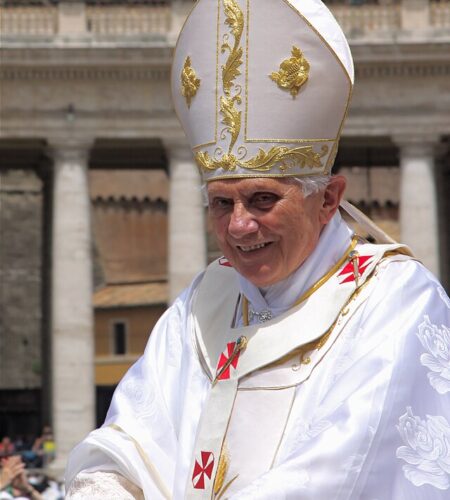
When I very promptly told the news of Benedict XVI’s statement, made in Ratisbon, that Islam was blameworthy for its violence and that the Muslim world had already responded angrily, I only wanted my readers to be the first to hear it. My entry #0042 was indeed published late on September 15 night, on the day the pope gave the offending lecture, but for all that I did have some idea of it. In the daytime a Muslim brother had told me the event and Islam’s first reactions; an English copy of the offending text was attached to his eMail — News travel very fast nowadays —. It was a lengthy theologico-philosophic lecture, in which somebody had underlined the few uncalled-for sentences.
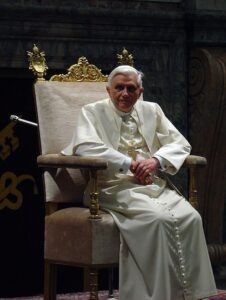
Photo : Giuseppe Ruggirello (Wikimedia)
The pope’s lecture was on the perpetual dualism of faith and reason. I was aware of this on September 15, but today I take some time to say a few things about it — because I do not “take the convenient shortcuts the press usually takes, so I can spare myself the trouble of thinking.” I think, please have no doubts about it, I think, but as far as this website is concerned, which is just a blog, but not a compendium of metaphysical thoughts, I’ve striven to keep level with everybody reads it. I exceptionally post this additional entry, though, to show those critical of me that I’m capable of having opinions.
The anxiety about reason raised by Benedict XVI in Ratisbon, I am of the opinion that traditional christiandom, whether based on the concepts of Nicea (325) or those of Rome or those of Jean Calvin, is going to need it some day (a day inexorably bound to come) in order to repeal some dogmas like the trinity — the God with three heads (Sign 23/7) — or the blood — vacuous (or empty) is the blood (XXXII/9) — shed on the cross for the redeeming of the world’s sins. Therefore, I like the state of anxiety for reason in all domains that Benedict XVI is in, so that his church and other churches may re-read the Scripture in its real plainness and reinterpret it.
What I find is to be regretted in Benedict XVI’s lecture in Ratisbon is that he gave it as Professor Joseph Ratzinger — he had indeed been a professor in that university —, but not as a pope in charge of worldwide responsabilities. He should have remembered it and refrained from mentioning in his discussionon of reason another discussion dating back to 1390 or so, once held between a Muslim scholar and Byzantine emperor Manuel II, who, they say, had concluded it by, “…God dislikes the blood (shed by Muhammad, which) is not acting with reason, (so it is) contrary to God’s nature.” Had Benedict when preparing his lecture been innocent of any ulterior motive by selecting this quote? Hadn’t he had the possibility of quoting something similar but concerning the blood plentifully shed by Christians in History? I don’t want to judge Benedict XVI on mere intent, but I insist that he in Ratisbon was a perfectly adequate illustration of the straw and the big log metaphor in the Sermon on the Mount.
No, I never fell into line with the men that throughout Islam have taken advantage of the pope’s statement and prompted Muslims to set fire to churches and even kill an innocent nun in Somalia. I said nothing but that Benedict XVI should have thought of the probability of his lecture bringing about and “justifying” misdeeds by islamist rioters in view of the awfully strained relations between Westerners and Easterners.
© Michel Potay 2006 — Tous droits réservés